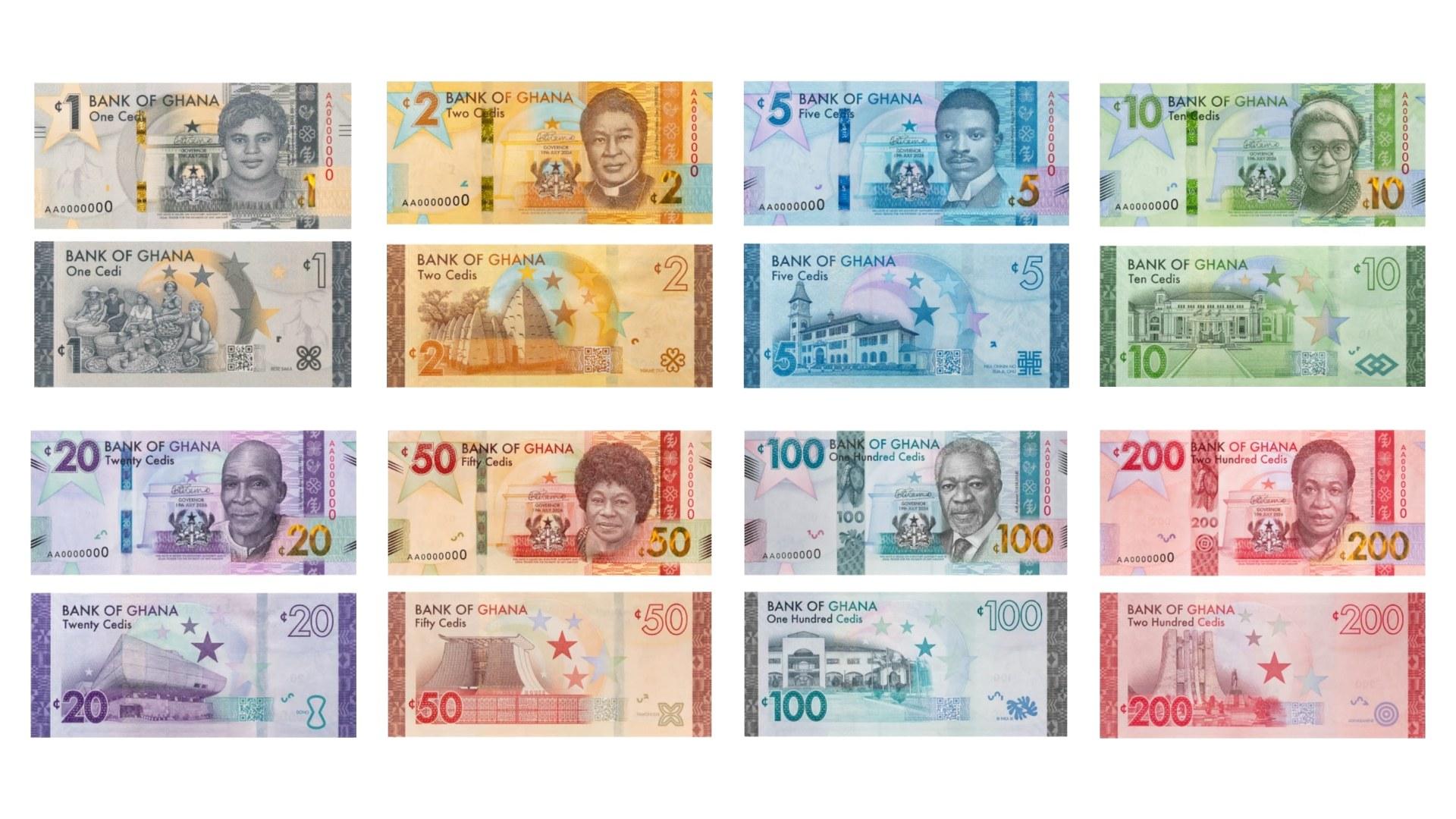
On Thursday, 12 November, President John Mahama launched the Heritage Series at the Bank of Ghana's Bank Square headquarters in Accra. It's a new set of cedi notes, all eight denominations from GH₵1 to GH₵200, and 3News reports it's the first change to the cedi's core designs in more than two decades. The new notes start reaching the public through commercial banks from 1 December.
Governor Johnson Pandit Asiama called it 'an important milestone in the evolution of Ghana's national currency'. For anyone who takes cash over a counter, it's also a few months of handling two sets of money at once. Here's what that means in practice.
Your prices stay exactly the same
This is a redesign, not a redenomination. A new GH₵10 note is worth the same as an old GH₵10 note. Nothing about your prices, your price list, your receipts or the amounts in your accounting system needs to change.
The old notes also stay legal tender. The President said the new notes will 'run side by side' with the old ones, and the Bank says there's no need to rush to exchange or withdraw them. Banks will take the old notes out of circulation gradually, and no end date has been announced. So if a customer pays you in old notes in January, take them.
It's worth telling your staff this plainly, because changeovers bring rumours. Anyone who says old notes are 'finished', or offers to swap them for a fee, is either confused or running a scam.
What's on the new notes
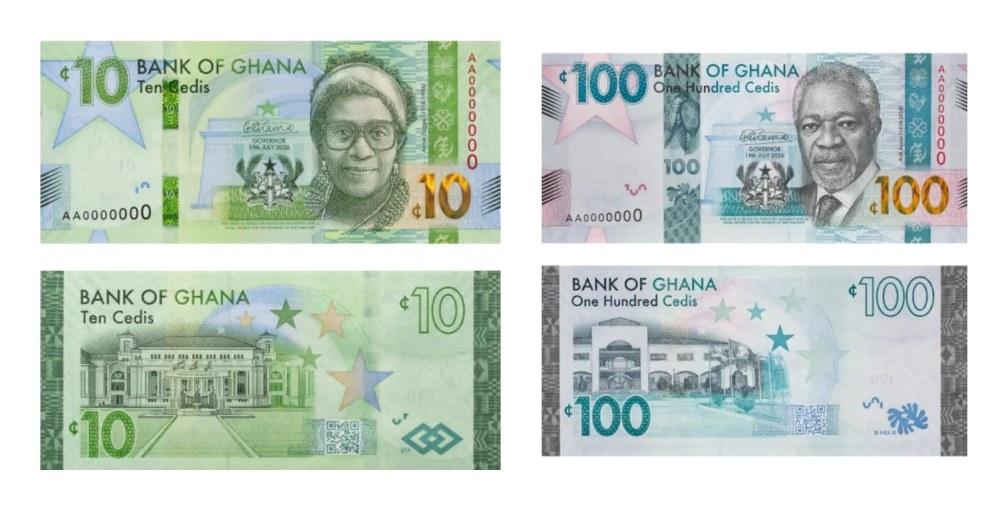
Each note carries a Ghanaian who shaped the country and, on the back, a place connected to them. Agnes Oforiwa Tagoe-Quarcoopome is on the GH₵1, with market women on the back. Justice Annie Jiagge is on the GH₵10, with the Supreme Court. Kofi Annan is on the GH₵100, with the peacekeeping training centre in Accra that carries his name, and Kwame Nkrumah is on the GH₵200. 3News has the full list of faces, buildings and Adinkra symbols.
For a shop, two details matter more than the portraits. Each note has its own colour, and the denominations come in different sizes, with tactile markings to help people who can't see well. And the whole series is smaller than the notes you handle today, made from reinforced cotton designed to last longer.
Smaller notes, and the machines that handle them
If your business only uses a cash box, this part won't affect you. If you use equipment that holds or reads notes, it might.
Think about cash drawers with fixed slots, note-counting machines, and anything that accepts notes on its own, such as a ticket, fuel or vending machine. None of the launch coverage says these will stop working, and we haven't seen the exact sizes. But a machine set up for one size of note is worth checking before December, not after a queue has formed. Ask the supplier who sold it whether it needs adjusting for the Heritage Series.
The first weeks are when fakes slip through
Most of the time your cashier knows a real note by feel. That instinct doesn't exist yet for notes nobody has held before, and for a while they'll be handling two designs of every value.
So learn them before customers bring them in. The Bank of Ghana has released a free app called The Cedi that lets you swipe through every new note and its security features, and it works offline once installed, Yen reports. Two cautions from that report: its camera scan isn't proof that a note is genuine, and you should check the developer name in the store before installing, because copycat apps appear around every launch.
Then make it a habit. When a new note comes in during the first few weeks, look at it properly instead of dropping it in the drawer. It takes a few seconds, and it's much cheaper than finding a fake at closing time.
If you sell money bouquets, read this
The Bank has asked people not to spray, crumple or staple the new notes, or turn them into money bouquets and cakes. This isn't new advice, but it's being enforced. According to 3News, bank staff worked with the police in October to arrest seven people over money bouquets and money cakes, and defacing the cedi is punishable.
If decorations or gift bouquets are part of what you sell, now is a good time to switch to designs that hold the notes in envelopes or sleeves, without staples, glue or folding.
Use the changeover to tighten up your cash
Moments like this show how well a business really knows its cash. If closing time means counting a pile of notes and hoping it matches what someone remembers selling, two designs of every note won't make it easier.
A simple routine helps. Record each sale as it happens, whatever the payment method. At closing, count the cash by denomination and compare it with what the system says you should have, so a shortfall shows up the same day with a name and a shift attached. And keep Mobile Money and card payments in the same record, so you're comparing all the money that came in.
The Bank is doing something similar on its side. It built its own software, called ECOMS, to link the central bank and commercial banks in managing the currency. Your shop doesn't need anything that big, but it deserves better than a notebook.

Where we come in
Nothing in this launch forces you to buy anything. Learn the notes, check your machines, brief your staff, and the changeover should pass quietly.
If it shows you that your sales and cash records aren't where they should be, that's what we build. Our inventory and sales systems track stock and sales together, and we're building SalePOS, a point of sale made for Ghanaian shops, pharmacies and food businesses, with daily reports and staff shifts built in. If you'd like to talk about your own setup, tell us how your business handles money today.
Want help putting this into practice?
Tell us what you're working on. We reply within 24 hours with a plan and a fixed price.
Start a project